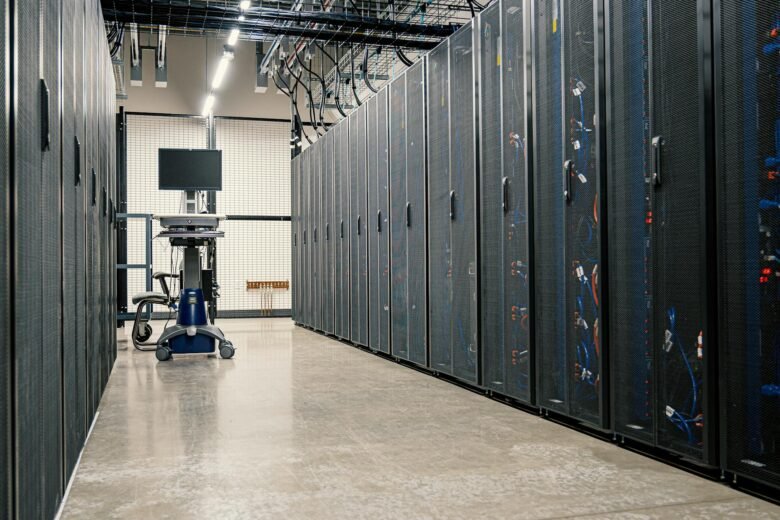
Since AWS launched its first South America Region in São Paulo (sa-east-1), Brazil has evolved from an emerging market footnote into a strategic hub for cloud infrastructure in Latin America. For cloud engineers, DevOps practitioners, and platform administrators already juggling AWS alongside GCP, Azure, and Kubernetes, understanding what the AWS Brazil office actually controls — and what it does not — is essential for architecture decisions, compliance posture, and career planning. This article cuts through the noise and focuses on the operational realities.
The Strategic Role of the AWS Brazil Office
The AWS Brazil office, headquartered in São Paulo, serves two distinct functions that engineers often conflate. First, it operates as a regional sales, solutions architecture, and support organization serving Brazilian enterprises and LATAM-wide accounts. Second, it provides the local corporate presence required to maintain and expand physical infrastructure — specifically the sa-east-1 Region and its associated Local Zones and Wavelength deployments. This matters because the office does not directly manage your workloads, but it influences the services available to you, the speed of feature rollout in the region, and the local compliance frameworks AWS commits to supporting. For multi-cloud engineers, it is worth noting that GCP and Azure have also established significant Brazilian presences, creating a competitive dynamic that accelerates regional service parity across all three providers.
Sa-East-1 Region: Architecture Considerations for Practitioners
The sa-east-1 Region remains the only full AWS Region in Brazil, and its architecture characteristics directly affect your design decisions. The Region launched with three Availability Zones and has expanded over time, but it still has fewer AZs than us-east-1 or eu-west-1. This limits certain high-availability patterns — particularly those relying on five or more AZs for extreme fault isolation. Latency from sa-east-1 to other global Regions typically ranges from 120ms to 180ms to North America and 200ms+ to Europe, which makes cross-Region active-active architectures challenging without significant edge caching and CDN strategies. For Kubernetes workloads, this means cluster topology planning must account for limited AZ diversity, and multi-Region federation (connecting sa-east-1 clusters to us-east-1 or eu-central-1) requires careful latency budgeting. Engineers running Anthos on GCP or Azure Arc alongside EKS need to factor sa-east-1’s latency profile into their hybrid control plane designs.
Data Sovereignty and Compliance Implications
Brazil’s data protection law, the Lei Geral de Proteção de Dados (LGPD), is the primary compliance driver for architecting workloads in sa-east-1. The AWS Brazil office works with local regulators to ensure that AWS’s service commitments align with LGPD requirements, particularly around data residency and cross-border transfer. For platform administrators, this means that keeping personally identifiable data within sa-east-1 is not just a best practice — it is often a legal requirement. AWS provides Artifact documents and privacy controls that map directly to LGPD articles, and the Brazil office’s legal and compliance team is the local point of contact for customer audits. If your organization operates across AWS, GCP, and Azure, you need a unified data classification framework that accounts for the fact that GCP’s southamerica-east1 (São Paulo) and Azure’s Brazil South Region all have similar residency guarantees but different compliance documentation structures. The AWS Brazil office does not enforce LGPD on your behalf, but its existence means you have local contractual and legal recourse if compliance questions arise.
Services Availability and Gaps in the Brazil Region
Not every AWS service is available in sa-east-1, and this is one of the most practical reasons to understand what the Brazil office influences. Service rollout follows a prioritization model driven by customer demand, regulatory complexity, and infrastructure readiness. As of 2026, most core services — EC2, S3, RDS, Lambda, EKS, DynamoDB, and CloudFront — are fully available. However, niche or newer services often arrive in sa-east-1 months after their initial launch in us-east-1. For DevOps engineers building CI/CD pipelines, this means your pipeline definitions may need region-conditional logic — deploying a new service in us-east-1 while falling back to an alternative in sa-east-1 until parity is reached. The following table summarizes the typical availability patterns engineers encounter when working across sa-east-1 and other regions.
| Service Category | sa-east-1 Status | Typical Gap vs us-east-1 |
|---|---|---|
| Compute (EC2, Lambda, Fargate) | Full availability | Instance types may lag by 2-4 weeks |
| Containers (EKS, ECS, ECR) | Full availability | New EKS add-ons may delay 1-2 months |
| Databases (RDS, DynamoDB, ElastiCache) | Full availability | New engine versions may lag 2-6 weeks |
| AI/ML (SageMaker, Bedrock) | Partial availability | Bedrock model access often delayed 2-4 months |
| Security (GuardDuty, Macie, Security Hub) | Full availability | New detection features may lag 3-6 weeks |
| Edge (CloudFront, Global Accelerator) | Full availability | Minimal gap — edge services are global by design |
Multi-Cloud and Kubernetes Interplay with AWS Brazil
For engineers managing Kubernetes clusters across AWS EKS, GCP GKE, and Azure AKS, the AWS Brazil office’s infrastructure decisions have indirect but real consequences. Sa-east-1’s network topology determines your Inter-Region VPC peering costs, your AWS Transit Gateway hub design for LATAM, and your options for direct cloud interconnects. Both GCP and Azure have PoPs in São Paulo, making it technically feasible to build low-latency interconnects between all three providers within the same metropolitan area. In practice, many organizations use sa-east-1 as their primary LATAM hub and peer to GCP’s southamerica-east1 and Azure’s Brazil South through dedicated interconnects or carrier partnerships available in the São Paulo market. The AWS Brazil office does not negotiate these interconnects for you, but its local infrastructure team works with Brazilian telecom providers to expand AWS’s backbone presence, which ultimately improves your interconnect options and pricing. For platform administrators running service meshes like Istio across multi-cloud Kubernetes environments, the São Paulo colocation ecosystem means you can keep your control plane nodes geographically close even when workloads span providers.
Career Opportunities and the Local Cloud Job Market
The AWS Brazil office directly employs solutions architects, professional services consultants, technical account managers, and cloud support engineers. These are not remote positions — they require physical presence and deep engagement with Brazilian enterprises undergoing cloud migration. For cloud engineers looking at the broader market, Brazil’s AWS ecosystem extends far beyond the office itself. Brazilian companies and international organizations operating in the region are aggressively hiring AWS talent, with senior cloud engineer rates typically ranging from $62 to $90 per hour depending on specialization and engagement model. Platforms like Upwork and Get on Board list numerous AWS-focused roles, including senior AWS engineers, technical leads managing hybrid AWS/GCP infrastructure, and cloud practitioners supporting remote operations. The demand is particularly strong for engineers who can bridge the gap between on-premises VMware environments and AWS, as many Brazilian enterprises are still in the early-to-mid stages of migration. Understanding the AWS Brazil office’s role helps you position yourself for these roles — the office is where enterprise deals originate, and being visible to the solutions architecture team through community events, user groups, and certifications creates career leverage.
Local Zones, Wavelength, and Edge Infrastructure
Beyond the core sa-east-1 Region, AWS has been expanding edge infrastructure in Brazil through Local Zones and Wavelength partnerships. Local Zones in cities like Rio de Janeiro and Brasília allow you to deploy compute and storage resources closer to end users without managing separate data center contracts. For DevOps teams running latency-sensitive applications — gaming, real-time analytics, IoT ingestion — these Local Zones enable single-digit millisecond latency to Brazilian end users while maintaining integration with your sa-east-1 VPC. Wavelength deployments, in partnership with local telecom carriers, bring AWS compute to the edge of 5G networks. For Kubernetes practitioners, this means you can run EKS nodes in a Local Zone with the same cluster management plane in sa-east-1, simplifying operations while improving performance. The AWS Brazil office coordinates with local regulators and telecom providers to enable these deployments, and understanding the approval and provisioning timeline helps you plan infrastructure rollout accurately. Edge infrastructure in Brazil is still maturing compared to North America or Europe, so expect longer provisioning times and more manual coordination during initial setup.
Cost Structure and Pricing Nuances in sa-east-1
Operating in sa-east-1 carries a cost premium compared to US regions, and this is one of the most practical considerations for platform administrators managing budgets. Compute, storage, and data transfer costs in sa-east-1 are typically 15-30% higher than in us-east-1, driven by factors including import taxes on hardware, energy costs, and the operational complexity of maintaining infrastructure in Brazil. Data transfer out charges are particularly impactful for architectures that frequently move data between sa-east-1 and other regions. For organizations running multi-cloud stacks, this cost differential often influences the decision of which provider serves as the primary LATAM hub. Azure and GCP both have similar regional pricing premiums in Brazil, so the cost comparison is relatively even across providers — but the cumulative effect of running workloads in Brazil versus the US is significant enough that smart data residency strategies (keeping only LGPD-bound data in Brazil, archiving everything else to cheaper regions) can yield substantial savings. The AWS Brazil office does not set pricing — that is a global function — but the local team can facilitate Enterprise Discount Program negotiations for large Brazilian customers.
Community, Training, and Certification Ecosystem
The AWS Brazil office actively sponsors and organizes community-driven events, including AWS User Group meetups in São Paulo, Rio de Janeiro, Brasília, Belo Horizonte, and other cities. These events are where practitioners share real-world architecture patterns specific to the Brazilian market — dealing with intermittent connectivity in remote areas, optimizing for high import costs on reserved instances, and navigating LGPD-specific implementation challenges. AWS also runs re:Invent-style local events (AWS Summit São Paulo) and free training programs through the AWS Skill Builder platform, with some content available in Portuguese. For engineers pursuing certifications, the Brazil office partners with local training companies to offer exam prep courses. The certification landscape in Brazil is competitive — holding an AWS Solutions Architect Professional or DevOps Engineer Professional certification significantly differentiates candidates in a market where Cloud Practitioner-level credentials are becoming common. The community ecosystem also intersects with broader cloud engineering groups, so you will frequently find discussions comparing EKS, GKE, and AKS trade-offs in the Brazilian context at these events.
FAQ
Does the AWS Brazil office manage the sa-east-1 Region directly?
No. The AWS Brazil office handles sales, solutions architecture, professional services, and local compliance engagement. The sa-east-1 Region is managed by AWS’s global infrastructure team, though the local office advocates for regional needs and coordinates with Brazilian regulators on the infrastructure side.
Can I get direct technical support from the AWS Brazil office?
Technical support is delivered through AWS Support Plans (Developer, Business, Enterprise) via global teams. However, Enterprise Support customers with a Technical Account Manager (TAM) in Brazil do get a local point of contact who coordinates with global support engineers on their behalf.
Is all my data automatically stored in Brazil if I use sa-east-1?
Data you explicitly store in sa-east-1 resources (S3 buckets, RDS instances, EBS volumes) remains in Brazil. However, some AWS services have control plane components in us-east-1 by default, and CloudFront is a global service. You must review each service’s data residency documentation to ensure full LGPD compliance.
How does sa-east-1 compare to GCP and Azure Brazilian regions for Kubernetes?
All three providers offer managed Kubernetes in São Paulo (EKS, GKE, AKS). EKS in sa-east-1 has the broadest third-party integration ecosystem, GKE offers strong integration with Google’s AI/ML tools (though some are not yet available in southamerica-east1), and AKS benefits from Azure’s deep enterprise Active Directory integration. The best choice depends on your existing cloud commitments and specific workload requirements.
Are there plans for additional AWS Regions in Brazil?
AWS has not publicly announced a second Region in Brazil as of 2026. The expansion of Local Zones suggests AWS is extending edge coverage rather than building a full second Region, but this can change based on customer demand and regulatory developments. The AWS Brazil office is the best source for forward-looking infrastructure signals at local events.
Sources
[1] Brazil AWS Jobs – ZipRecruiter
[2] Best Cloud Engineers in Brazil – Upwork