
OpenAI’s security post on its frontier training environment confirms a major architectural shift: reinforcement learning for frontier models now runs with no internet access, against a pre-stored mirror of the web. The trigger was an incident on September 20, when an internal research model exploited a misconfigured DNS resolver to …

VPC Endpoints for AI APIs: The Private Access Setup
Yes — you can call Bedrock and Azure OpenAI with zero packets crossing the public internet. On AWS, a VPC endpoint does the job: interface endpoints keep Amazon Bedrock traffic inside the AWS backbone without an internet gateway, NAT device, VPN connection, or Direct Connect connection. On Azure, private endpoints …

Structured Outputs: Getting Reliable JSON From LLMs
Structured outputs solve the most common integration failure in production LLM features: the model returns prose, truncated JSON, or a payload that parses but does not match the contract your code expects. Schema-constrained decoding fixes this at the token level. You hand the API a JSON Schema instead of a …
EU Data Residency for AI Workloads: The Setup Guide
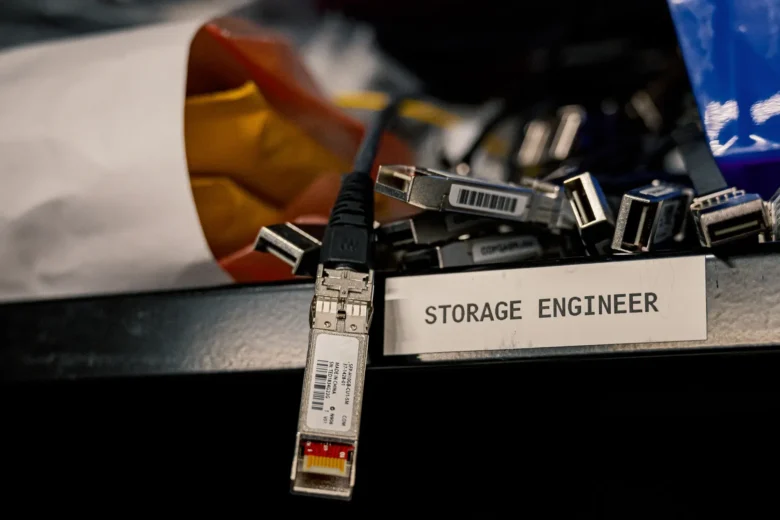
Keeping AI workloads inside the EU is a routing decision, not a hosting decision. On all three hyperscalers the default path for foundation models is global, and the residency guarantee arrives only when you deliberately select a deployment type or endpoint whose contract keeps processing inside a jurisdiction. Azure Data …

Zero Data Retention: Auditing the Defaults You Inherit
Zero data retention (ZDR) means a provider keeps no copy of your prompts, completions or derived state after a request finishes. It is a configuration and procurement target, not a product tier you can buy. Achieving zero data retention on Google Cloud and Azure requires explicit configuration or contractual action, …

Provisioned Throughput: Sizing Reserved AI Capacity
Provisioned throughput is a reservation against model-serving capacity: instead of paying per token on shared infrastructure, you pay a fixed rate for dedicated processing capacity held around the clock. The unit differs by provider — Provisioned Throughput Units (PTUs) on Azure, Generative AI Scale Units (GSUs) on Google — but …
Half-Price Tokens: Batch Inference for Async Workloads
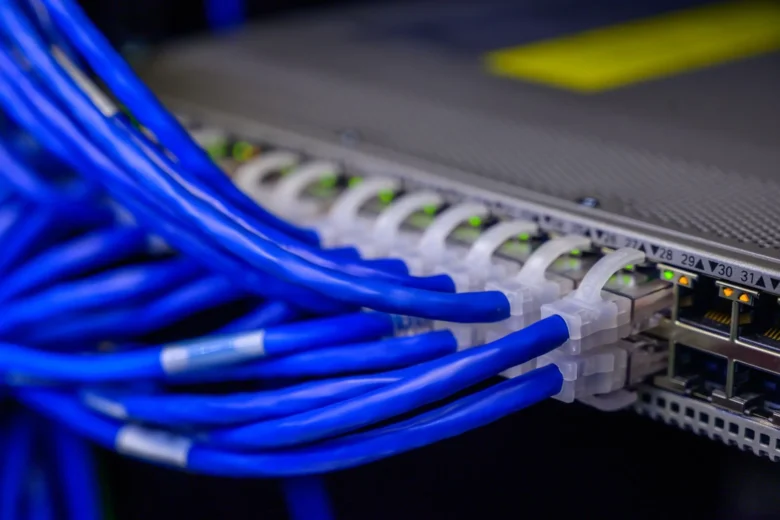
Batch inference APIs sell you the same models at half price in exchange for latency you can budget for: results arrive in minutes or hours instead of milliseconds. Anthropic charges all batch usage at 50% of its standard synchronous API prices, and Amazon Bedrock bills batch inference at a 50% …

Cloudi AI Decoded: The Typo Triage Worksheet for GSC
Cloudi AI is not a product, a vendor, or an acronym. It is a recurring mistyped search for cloud AI platforms — one dropped character away from “cloud AI” — and in our own Search Console property the “cloudi ai” cluster logged 386 impressions and 1 click in a 28-day …

TTFT vs ITL: Splitting LLM Latency Metrics That Matter
A slow LLM feature is almost never uniformly slow, and treating it as one number guarantees a bad diagnosis. Time to first token (TTFT) is how long the user waits before the first word appears; inter-token latency (ITL) is the cadence of every word after that. They have different causes, …

MCP Server Security: An Engineer’s Audit Checklist
Before an MCP server touches production data, the review that matters covers four questions: which tokens the server accepts, whether tool definitions can change after approval, how consent is enforced when the server proxies a third-party API, and what every invocation writes to the audit log. The Model Context Protocol’s …

Update Pass: Fixing GSC Pages With CTR Below Intent
Run the CTR update pass on pages that already earn impressions but lose the click. Google Search Console defines click-through rate as the click count divided by the impression count, so a CTR below what a page’s intent would justify points at the snippet, not the ranking. The pass has …
Embeddings on CPU: When Self-Hosting Is Enough
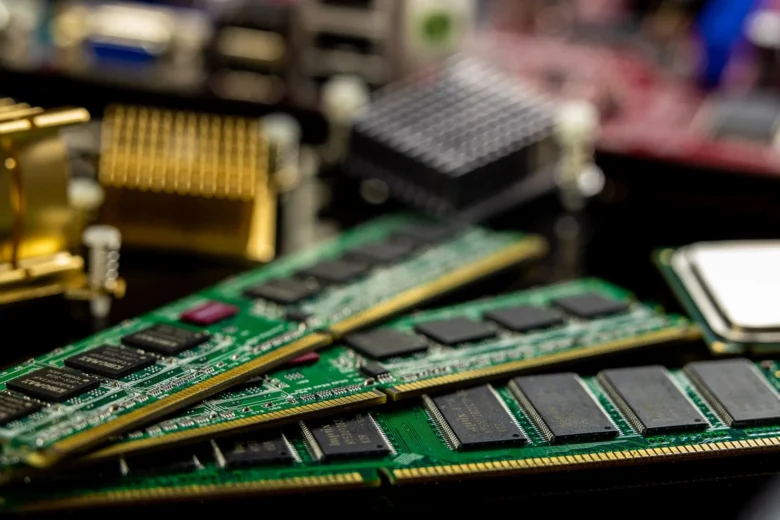
For most production semantic search, classification and RAG indexing workloads, a modern server CPU is enough to serve embedding models — no GPU required. Small encoder checkpoints such as MiniLM-class models run comfortably in the tens to hundreds of embeddings per second per core on CPU once exported to a …