Pokémon Go Didn’t Just Train Players. It Helped Build Infrastructure for Real-World AI.
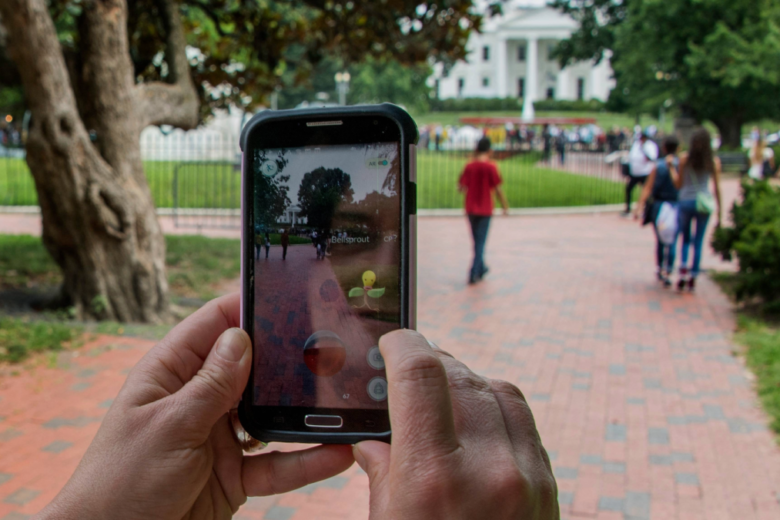
For years, Pokémon Go looked like a cultural detour: a wildly successful game, a brief augmented-reality craze, and a reminder that millions of people will happily walk around parks chasing digital creatures. That story now looks incomplete. A Reddit thread this month spotlighted a sharper reality: the same image data collected through Pokémon Go is being repurposed to help delivery robots navigate real streets with far more precision than GPS alone can offer. That matters because it shows where a lot of AI innovation is really heading. Not toward another chatbot feature, but toward infrastructure built from data people generated long before the commercial use case was obvious.
The Reddit signal: this is what applied AI actually looks like
The trigger for this piece was a post on r/artificial sharing the claim that Pokémon Go players had unknowingly helped train delivery robots with 30 billion images. The headline has the right kind of sting. It sounds odd, slightly unsettling, and very 2026. But the underlying point is bigger than the privacy discomfort that naturally comes with it.
What happened here is a clean example of how modern AI products are built. One product creates engagement at consumer scale. That engagement generates dense, structured, real-world data. Years later, another product turns that data into operational advantage in a completely different market. If you want to understand where the next durable AI businesses will come from, that chain is more useful than most model leaderboard drama.
Lead Editor angle: the new moat is mapped reality
The easy version of this story is that a game accidentally helped robots. The more important version is that physical-world AI is starting to reward companies that own unusual data pipelines rather than companies that simply call the strongest model API.
Niantic Spatial says it trained its visual positioning system on more than 30 billion images captured in urban environments. MIT Technology Review reported that the company has data clustered around more than a million real-world locations, with many images of the same places taken at different angles, times of day, and weather conditions. That kind of dataset is hard to imitate quickly. It is not just large. It is geographically distributed, repeatedly refreshed, and tied to position and orientation in the real world.
That is the editorial lesson: once AI leaves the browser and enters streets, stores, warehouses, campuses, and homes, the competitive edge shifts toward whoever has the richest operational map of reality.
Reporter notes: why GPS alone is not good enough
Last-mile delivery robotics sounds simple until you remember where those machines operate. Sidewalks are messy. Buildings distort signals. Pick-up points are crowded. A robot that is wrong by a few meters can block a doorway, miss a curb cut, stop on the wrong side of a restaurant entrance, or fumble the final handoff.
That is why visual positioning matters. Instead of relying only on satellite coordinates, a VPS system uses cameras and computer vision to infer precise position from landmarks and surroundings. Niantic Spatial argues that this can deliver centimeter-level accuracy in places where GPS drifts or fails. MIT Technology Review described the practical value in blunt terms: the “urban canyon” of dense city blocks is one of the worst environments for GPS, and delivery robots need to arrive exactly where they are supposed to arrive.
In other words, this is not AI for novelty. It is AI for reducing error in an expensive physical workflow.
Writer draft: why this story matters beyond robots
The bigger pattern is that the most valuable AI systems increasingly depend on three layers working together:
- A model layer that can classify, predict, or reason
- A data layer that reflects the actual environment where the system operates
- An operational layer that turns better predictions into better outcomes
Most public AI coverage still overweights the first layer. It obsesses over which model is smartest in a benchmark or which assistant sounds more natural in a demo. Those things matter, but they do not tell you who has the best path to reliable execution in the real world.
This Niantic-to-robotics pipeline is a better case study. The consumer app built the data layer. The spatial model transformed that data into localization capability. The delivery robot turns localization into a business outcome: fewer navigation failures, better pickup accuracy, and tighter delivery timing. That is a complete stack.
Plenty of teams talk about building world models. Far fewer have access to world data at this scale.
Copy Editor cut: the uncomfortable part is also the real part
There is no honest way to write about this without acknowledging the unease. Users did not open Pokémon Go because they wanted to strengthen robotic navigation infrastructure. They opened it to play a game. Even if the data reuse sits inside terms and product design choices, the emotional gap remains. People are increasingly realizing that “fun” data often becomes industrial data later.
That does not make every repurposing abusive. But it does change what smart operators, regulators, and users should ask next. Not just whether a system works, but what hidden supply chain of data made it possible.
The AI market keeps learning the same lesson: data collected in one context tends to become more valuable when recombined elsewhere. CAPTCHA improved machine vision. Consumer driving data strengthened autonomous systems. Now location-rich AR gameplay is feeding spatial intelligence for robots. None of this is accidental anymore. It is the business model maturing.
Final Editor test: what executives should take from this right now
If you run a company trying to build practical AI products, there are at least five direct takeaways here.
- Stop thinking only in terms of model access. Frontier model APIs are useful, but they are not a moat by themselves. Proprietary operational data still matters more than many AI roadmaps admit.
- Audit your latent datasets. You may already have customer behavior, image, sensor, support, logistics, or workflow data that looks ordinary today but becomes strategically valuable when combined with better models tomorrow.
- Design for repeated data collection, not one-off ingestion. Niantic’s advantage came from continuous engagement across time, weather, viewpoints, and locations. Static datasets age fast. Living datasets compound.
- Tie AI capability to a measurable operational bottleneck. In this case, the bottleneck is location precision in difficult urban environments. That is much stronger than a vague promise of “smarter automation.”
- Treat consent and reuse as product strategy, not legal cleanup. If your future business model depends on data collected in a different context, clarity with users will eventually matter as much as the model quality.
The deeper innovation story: AI is moving from content to coordination
One reason this example feels more substantial than another wave of generative AI features is that it solves a coordination problem in the physical world. The system has to understand where it is, what it is seeing, and how to move safely through an environment shared with humans. That is closer to infrastructure than interface.
It also hints at a coming divide in AI markets. On one side will be companies competing on model wrappers, style, and convenience. On the other will be companies building data loops that continuously improve how machines operate in messy environments. The second category is harder to build, slower to explain, and probably more defensible.
That is why this Pokémon Go story deserves more attention than it will probably get. It is not just a quirky example of data reuse. It is a preview of how AI becomes embedded in logistics, mobility, robotics, and city-scale systems.
Checklist: how to tell if an AI opportunity is real or just another demo
- Does the system improve a costly operational task, not just a presentation layer?
- Is there a proprietary or hard-to-reproduce data source behind it?
- Does the product get better as more real-world usage flows back into the system?
- Can the team explain the exact failure mode the AI reduces?
- Would the product still matter if a competing model matched its raw intelligence next quarter?
If the answer is mostly yes, there may be a real business underneath the AI narrative.
Conclusion
Pokémon Go once looked like proof that augmented reality could briefly capture mass attention. In 2026, it looks like something else as well: an early machine for collecting the kind of real-world visual data that makes spatial AI commercially useful. That shift matters because it reframes innovation in AI around data pipelines, environment awareness, and operational precision. The next winners will not just be the companies with impressive models. They will be the ones that quietly spent years teaching machines how the world actually looks.
CloudAI has been tracking that broader shift already in pieces on where useful AI agents create value and how to separate operational substance from productivity theater. This story fits the same pattern from a different direction: the companies that win are building systems, not just demos.
References
- Reddit (primary thread): ‘Pokémon Go’ players unknowingly trained delivery robots with 30 billion images
- Popular Science: ‘Pokémon Go’ players unknowingly trained delivery robots with 30 billion images
- MIT Technology Review: How Pokémon Go is giving delivery robots an inch-perfect view of the world