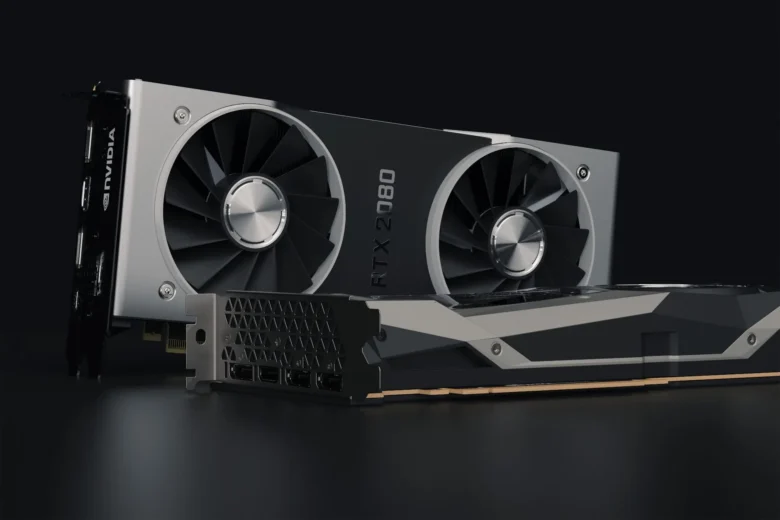
Navigating Cloud AI GPU Costs
Engineers deploying cloud AI solutions face escalating GPU costs. Effective Cloud AI GPU Cost Optimization requires strategic choices in instance selection, utilization, and model quantization. For fault-tolerant workloads, Amazon EC2 Spot Instances offer discounts of up to 90% over On-Demand pricing, making them a compelling option for batch inference and training jobs [claim_1]. However, real-time serving generally requires more stable On-Demand or Reserved Instances.
Understanding GPU Performance for LLM Inference
When running large language model (LLM) inference, the primary bottleneck is not always raw computational power. LLM inference is a memory-bandwidth-bound workload: the tokens per second scales roughly linearly with High Bandwidth Memory (HBM) bandwidth, rather than peak TFLOPs [claim_2]. This means a GPU with lower peak compute but higher memory bandwidth can outperform others for decode-heavy workloads.
For example, comparing NVIDIA’s top-tier GPUs, the H100 and A100 show distinct performance profiles. The H100, with 3.35 TB/s HBM3 bandwidth, achieves roughly 1.5-1.7x higher tokens/sec for 70B FP16 models compared to the A100’s 2.0 TB/s HBM2e [claim_3]. This difference is critical for high-throughput inference where every millisecond counts.
Strategic GPU Instance Selection and Quantization
Choosing the right GPU instance directly impacts your budget. Amazon EC2 GPU instances range from $0.526/hr (g4dn.xlarge, NVIDIA T4) to $98.32/hr (p5.48xlarge, 8× H100), with a p4d.24xlarge (8× A100) costing $32.77/hr [claim_5]. Understanding these costs and matching them to workload requirements is paramount. For many production RAG and 13B–34B inference tasks, a g5.12xlarge (4× A10G) at $5.672/hr offers a balanced price-performance ratio. Newer g6.12xlarge instances (4x L4) provide better price-performance than g5.12 for inference.
Beyond instance type, model quantization is a powerful lever for cost reduction. FP8 halves the weight memory and doubles the effective Tensor Core throughput [claim_4]. This is particularly impactful for large models like 70B LLMs, where FP8 allows them to fit on fewer GPUs, dramatically reducing cost-per-token. For instance, a 70B model with FP8 can fit on a single 80 GB H100, effectively halving the cost compared to FP16. The A100, lacking native FP8 support, faces a disadvantage here compared to newer Hopper (H100) and Ada (L40S) architectures.
Cost Reduction Strategies for Cloud AI Workloads
Beyond choosing the right GPU, several strategies can significantly reduce overall cloud AI expenses:
- Right-Sizing Instances: Consistently evaluate and select the minimum viable GPU instance type that meets performance requirements without overprovisioning.
- Spot and Reserved Instances: Utilize Spot Instances for interruptible training and batch processing. For stable, baseline inference loads, Reserved Instances can offer substantial savings (up to 62% off for a 3-year term).
- Scale-to-Zero: Implement auto-scaling solutions that can completely deprovision GPUs when not in use, eliminating idle compute costs.
- Data Egress Optimization: Minimize data transfer out to the internet, which can add 20-40% to your bill for streaming workloads. Utilize services like CloudFront and response compression.
- Snapshot Management: Regularly review and prune old EBS snapshots and model checkpoints to avoid accumulating storage costs.
Comparison of NVIDIA GPUs for LLM Inference
| Spec | H100 SXM (80GB) | A100 SXM (80GB) | L40S (48GB) |
|---|---|---|---|
| Architecture | Hopper | Ampere | Ada Lovelace |
| Memory Bandwidth | 3.35 TB/s HBM3 | 2.0 TB/s HBM2e | 864 GB/s GDDR6 |
| FP16 Tensor TFLOPs | 989 | 312 | 362 |
| FP8 Tensor TFLOPs | 1979 | — (Not Supported) | 733 |
| Cost per M Tokens (Llama-3-70B FP8) | ~$0.75 | — (No FP8) | ~$1.80 (won’t fit 70B FP16) |
| Cost per M Tokens (Llama-3-8B FP8) | ~$0.22 | — (No FP8) | ~$0.20 |