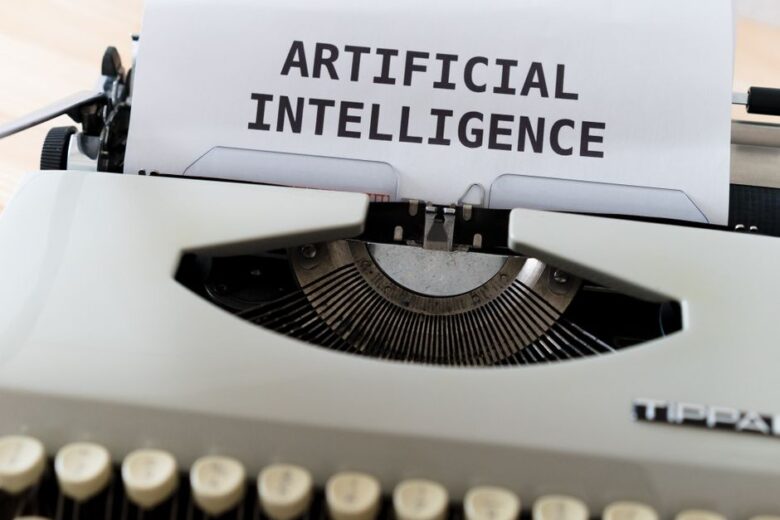
- Autonomous AI agents now handle multi-step DevOps, support, and research tasks with minimal human oversight.
- AI coding assistants evolved into agentic partners that plan features, open PRs, and review diffs across entire repositories.
- Multimodal models processing text, images, audio, and video are mainstream production APIs in 2026.
- Enterprise AI productivity gains range from 40–55% in development to 70% Tier-1 support deflection.
- Governance, audit trails, and prompt-injection defenses are now mandatory for production AI deployments.
Why AI Tools Matter Now
Artificial intelligence tools have moved far beyond simple chatbots in 2026. From autonomous agents orchestrating entire workflows to multimodal models processing text, images, and code simultaneously, AI is reshaping how teams build software, analyze data, and deliver products at scale.
Autonomous Agents Take Over
Autonomous AI agents represent the single most transformative shift in enterprise software this year. Unlike traditional automation scripts, these agents plan, reason, and execute multi-step tasks with minimal human oversight. Frameworks such as AutoGen, CrewAI, and LangGraph now support production-grade agent orchestration with built-in error handling and state management.
Consider a typical DevOps pipeline. An autonomous agent can monitor deployment health, roll back failing services, notify the on-call engineer, and open a remediation pull request — all without a human pressing a button. Organizations deploying agent-based workflows report up to 40% reduction in incident response time, according to a recent McKinsey QuantumBlack analysis.
AI Coding Assistants Evolve
AI coding assistants have graduated from autocomplete novelties to full-stack development partners. Tools like GitHub Copilot X, Cursor, and Amazon Q Developer now understand entire repository context, suggest architectural improvements, and write tests that actually pass.
The key evolution is agentic coding: the assistant doesn’t just suggest the next line — it plans a feature across multiple files, creates branches, and opens a draft pull request. A practical example using the OpenAI Agents SDK in Python:
from openai import Agent, Runner

code_reviewer = Agent(
    name="code-reviewer",
    model="gpt-4.1",
    instructions="""Review the given diff for:
    - Security vulnerabilities
    - Performance regressions
    - Style guide violations
    Return a structured JSON report.""",
)

result = Runner.run_sync(
    code_reviewer,
    input="Review diff: " + open("changes.patch").read(),
)
print(result.final_output)
This pattern — an AI agent performing a well-scoped task and returning structured output — is now standard in CI/CD pipelines at companies like Shopify and Stripe. For a deeper look at AI-native development workflows, see our coverage of building Claude skills as a developer.
Multimodal AI Goes Mainstream
Multimodal models that process text, images, audio, and video in a single inference call are no longer research demos — they are production APIs. GPT-4.1, Gemini 2.5 Pro, and Claude Opus 4 all support mixed-modality inputs, enabling use cases that were impossible two years ago.
Real-world applications include medical imaging diagnostics, automated document processing (extracting tables from PDFs with visual layout understanding), and video content moderation at scale. Teams building on Google’s AI agent platform can combine vision and language models to create assistants that “see” user screenshots and debug UI issues in real time.
Productivity Gains at Scale
The productivity impact of AI tools is now measurable across industries. A Microsoft productivity study found that developers using AI assistants complete tasks 55% faster on average, with the biggest gains in testing, documentation, and boilerplate code generation.
But productivity extends beyond code. Marketing teams use AI to draft campaign copy, analyze A/B test results, and generate creative assets in minutes instead of days. Customer support platforms deploy AI agents that resolve 70% of Tier-1 tickets autonomously, freeing human agents for complex escalation paths. The table below summarizes the most impactful AI productivity tools in 2026:
| Tool | Category | Key Capability | Est. Productivity Gain |
|---|---|---|---|
| GitHub Copilot X | Code | Full-repo context, agentic PRs | 55% faster development |
| Cursor | Code | Multi-file edits, terminal integration | 45% faster iteration |
| Notion AI | Knowledge | Summarization, drafting, search | 30% less writing time |
| Jasper | Marketing | Campaign copy, brand voice | 3x content output |
| Intercom Fin | Support | Autonomous ticket resolution | 70% Tier-1 deflection |
| Replit Agent | Development | Full app generation from prompt | 10x prototyping speed |
| Perplexity Pro | Research | Real-time web research with citations | 60% faster literature review |
| Runway ML | Creative | Video generation and editing | 5x video production |
Agent Memory and Context
One of the critical enablers of autonomous agents is persistent memory. Early LLM-based tools were stateless — every conversation started from zero. In 2026, agents maintain long-term context through vector databases, conversation summaries, and structured knowledge graphs.
However, as we explored in our analysis of why agent memory is still problematic, simply storing embeddings in a vector database is not enough. Effective agent memory requires semantic retrieval, recency weighting, and conflict resolution — the agent must know which facts are still current and which are stale.
AI-Native Workflow Platforms
The emergence of AI-native workflow platforms marks a fundamental shift from “AI as a feature” to “AI as the architecture.” Platforms like Zapier Central, Make AI, and Relevance AI allow non-technical users to build complex automation by describing goals in natural language rather than wiring connectors manually.
These platforms embed reasoning directly into the workflow layer. Instead of rigid if-then rules, the system decides which tool to call, how to handle errors, and when to escalate to a human. This is particularly impactful for operations teams managing multi-step processes across SaaS tools.
Security and Governance Rise
As AI tools gain autonomy, security and governance have become board-level concerns. Enterprises now require AI audit trails, prompt injection defenses, and data residency controls before deploying any AI agent in production. Frameworks like OWASP LLM Top 10 and NIST AI RMF provide structured guidance for assessing AI tool risk.
Best practices in 2026 include: sandboxing agent execution environments, implementing human-in-the-loop approval for high-stakes decisions, and maintaining comprehensive logs of every agent action. Organizations that skip governance are finding that a single prompt injection vulnerability can cost millions in data exposure.
What Comes Next
The trajectory is clear: AI tools in 2026 are more autonomous, more capable, and more deeply embedded in professional workflows than ever before. The organizations that win will be those that treat AI not as a productivity add-on but as a core architectural component of their technology stack.
Expect the second half of 2026 to bring tighter integration between agents (multi-agent collaboration), better reasoning under uncertainty, and the first wave of self-improving AI systems that optimize their own prompts and tool configurations based on outcome feedback. The future of work isn’t human or AI — it’s human and AI, each doing what they do best.