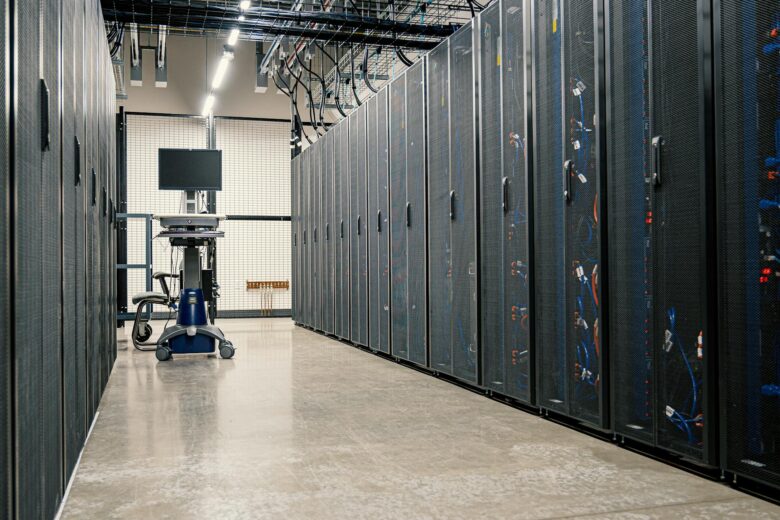
Brazil’s tropical climate presents a distinct challenge for hyperscale data center operations: maintaining optimal server operating temperatures with high ambient heat and humidity year-round. AWS has expanded its presence in the country with regions like sa-east-1 (São Paulo), and the refrigeration strategy behind these facilities directly impacts the availability, performance, and cost profiles that cloud engineers and platform administrators deal with daily. This article breaks down how AWS approaches cooling in Brazil, why it matters for your infrastructure choices, and what practitioners should consider when designing workloads for South American regions.
The Climate Challenge for Data Centers in Brazil
Brazil spans multiple climate zones, but the densely populated southeast — where AWS concentrates its infrastructure — features consistently high temperatures averaging 25–30°C year-round, with frequent spikes above 35°C during summer months. Relative humidity regularly sits between 70% and 85%, which complicates cooling because traditional air-side economization (pulling in outside air) requires significant dehumidification to prevent condensation and corrosion on server components. Unlike data centers in Nordic countries or temperate zones where free cooling can handle a large portion of the thermal load for most of the year, Brazilian facilities must rely more heavily on mechanical refrigeration systems. This has direct implications for Power Usage Effectiveness (PUE), operational costs, and ultimately the pricing structure that AWS passes on to customers running workloads in sa-east-1.
How AWS Designs Cooling Systems for Tropical Regions
AWS data center cooling architecture follows a layered approach that combines raised-floor air distribution, direct evaporative cooling where climate permits, and chilled water systems backed by mechanical refrigeration. In tropical contexts like Brazil, the mechanical refrigeration layer carries significantly more load. Chiller plants — typically water-cooled centrifugal or screw chillers — form the backbone of the cooling chain. These chillers reject heat through cooling towers, which themselves face efficiency challenges in high-humidity environments because the wet-bulb temperature (the theoretical limit of evaporative cooling) stays elevated. AWS mitigates this through redundant chiller configurations, variable-speed drives on compressors and fans, and advanced controls that dynamically adjust cooling output based on real-time IT load and weather conditions. The design philosophy prioritizes N+1 or greater redundancy for cooling systems, ensuring that the failure of any single chiller, pump, or cooling tower cell does not compromise the data center’s ability to maintain the ASHRAE-recommended thermal envelope for servers.
ASHRAE Thermal Guidelines and AWS Operating Ranges
The American Society of Heating, Refrigerating and Air-Conditioning Engineers (ASHRAE) publishes widely referenced thermal guidelines for data centers that AWS and other hyperscalers use as foundational design inputs. The recommended envelope for IT equipment specifies inlet temperatures between 18°C and 27°C, with relative humidity between 20% and 80%. AWS typically operates toward the warmer end of this range to reduce cooling energy consumption — a strategy that becomes more complex in Brazil where the delta between outside air and the target supply temperature is small. When outside conditions exceed the allowable envelope (which happens frequently in Brazilian summers), the mechanical cooling system must provide 100% of the cooling duty. Understanding these boundaries matters for cloud engineers because it influences the frequency and duration of cooling-mode transitions, which in turn affect the statistical likelihood of thermal events that could trigger capacity throttling on instances.
Impact on Workload Architecture and Region Selection
For DevOps practitioners and platform administrators, the cooling infrastructure in a region is not an abstract concern — it translates into tangible architectural decisions. Workloads with strict latency requirements for Brazilian users (financial services, real-time gaming, IoT telemetry processing) often must run in sa-east-1 regardless of cooling-related cost premiums. However, engineers designing fault-tolerant architectures should consider how cooling system dynamics interact with their availability strategies. A cooling system failure, even with redundancy, can cause localized thermal excursions that trigger instance health checks and potential automated recovery actions. Multi-AZ deployment patterns in sa-east-1 provide protection, but it is worth noting that if AZs share cooling infrastructure dependencies (such as a common chiller plant or cooling water loop), the effective fault domain may be narrower than expected. Platform administrators should map their critical workloads across AZs with an understanding that physical separation of cooling systems is a factor in true redundancy.
Sustainability and the PUE Equation in Brazilian Facilities
Power Usage Effectiveness remains the primary metric for data center energy efficiency, calculated as total facility power divided by IT equipment power. A PUE of 1.0 would mean every watt goes to computing; in practice, hyperscale facilities typically achieve 1.10–1.20 in favorable climates. Tropical locations push this number higher because mechanical cooling draws substantially more power. AWS has committed to reaching 100% renewable energy for its operations, and this commitment extends to Brazilian facilities. However, the higher PUE in tropical data centers means that more renewable energy capacity must be procured per unit of useful compute compared to facilities in cooler climates. For cloud engineers tracking sustainability metrics — increasingly common as organizations adopt carbon-aware computing strategies — running workloads in sa-east-1 carries a higher implicit carbon intensity per compute hour than equivalent workloads in us-east-1 or eu-west-1, even when the facility is fully powered by renewables, because more energy is consumed on non-computing functions like refrigeration.
Liquid Cooling and the Future of AWS Brazil Infrastructure
The industry is shifting toward direct-to-chip liquid cooling and immersion cooling to handle the thermal density of next-generation processors, including GPU clusters for AI/ML workloads. Liquid cooling is fundamentally more efficient than air cooling because water has roughly 3,500 times the heat capacity of air by volume, and it operates independently of ambient humidity. For AWS facilities in Brazil, liquid cooling represents a potential game-changer: it could dramatically reduce the mechanical refrigeration burden by removing heat at the source rather than relying on chilled air to sweep it away. While AWS has not publicly detailed liquid cooling deployments in sa-east-1 specifically, the company’s broader investment in liquid cooling for AI infrastructure suggests that future capacity expansions in Brazil will likely incorporate these technologies. Cloud engineers planning long-term infrastructure roadmaps should anticipate that thermal constraints on high-density workloads in tropical regions will ease as liquid cooling matures, potentially making sa-east-1 more attractive for GPU-intensive workloads that currently face availability or cost limitations.
Comparing Cooling Approaches Across Hyperscalers in South America
While AWS leads in Brazilian cloud market share, understanding how its cooling strategy compares to other providers offers useful context for multi-cloud practitioners. Google Cloud Platform, as the originator of Kubernetes, has invested heavily in container-optimized infrastructure and has been vocal about its AI-driven cooling controls, which use deep learning to optimize cooling system setpoints in real time [2]. Azure’s approach in regions with similar climates (such as its Singapore and Brazil-closer regions) emphasizes modular data center designs with integrated liquid cooling options. The table below summarizes the key differentiators relevant to cooling infrastructure in tropical deployments.
| Aspect | AWS | GCP | Azure |
|---|---|---|---|
| Primary Cooling Method | Chilled water + air distribution | AI-optimized cooling controls | Modular units with liquid cooling |
| Tropical PUE Impact | Moderate-to-high mechanical load | Reduced via predictive optimization | Moderate via modular isolation |
| Liquid Cooling Adoption | Accelerating for AI workloads | Active in TPU clusters | Integrated in latest gen designs |
| Redundancy Model | N+1 chiller, cooling tower | N+1 with AI failover prediction | N+1 modular, hot-swappable |
Practical Considerations for DevOps Teams Operating in sa-east-1
For day-to-day operations, there are several actionable considerations that DevOps and platform teams should integrate into their runbooks and architecture reviews. First, monitor instance thermal metrics where available — AWS provides EC2 instance health checks that can indicate underlying thermal stress, and third-party monitoring tools can track CPU thermal throttling patterns. Second, design your auto-scaling policies with thermal awareness: during Brazilian summer afternoons, if a cooling system is operating at peak capacity, adding more instances to an already hot AZ could exacerbate thermal load. While AWS manages this at the infrastructure level, understanding the dynamic helps explain transient performance variations. Third, for workloads that can tolerate slight latency increases, consider hybrid deployment patterns where the control plane and critical stateful components run in sa-east-1 but burst compute can overflow to us-east-1 or eu-south-1 during peak periods, reducing thermal and cost pressure on the Brazilian facility. Fourth, when planning Kubernetes cluster sizing in sa-east-1, factor in that node density may need to be lower than in temperate regions if the facility is air-cooled, as higher node density increases the local heat load per rack.
Skills and Certifications Relevant to Infrastructure Decisions
Understanding data center cooling is not typically covered in cloud certification curricula, but the broader infrastructure knowledge that supports these decisions is. AWS certifications such as those offered through the AWS Cloud Institute emphasize hands-on lab experience with infrastructure services, capacity planning, and operational best practices [3]. For DevOps practitioners working across multiple clouds, comparative guides on AWS, Azure, and GCP services help build the cross-platform fluency needed to evaluate infrastructure trade-offs, including regional differences in facility design and operational characteristics [2][5]. While no certification will teach you chiller plant design, the systems thinking developed through rigorous cloud training programs directly applies to reasoning about how physical infrastructure constraints shape cloud service behavior [1][6].
FAQ
Does the tropical climate in Brazil make AWS sa-east-1 less reliable?
No. AWS designs all its data centers, including those in Brazil, to meet the same availability SLAs as other regions. The cooling systems are over-provisioned with redundancy (N+1 or better) to handle the climate. However, the operational complexity is higher, which means the probability of cooling-related maintenance events may be slightly elevated compared to temperate regions.
Why should a cloud engineer care about data center refrigeration?
Cooling infrastructure affects PUE, energy costs, carbon intensity, and the thermal headroom available for high-density workloads. These factors influence instance pricing, sustainability reporting, and the feasibility of running GPU-heavy or HPC workloads in a given region.
Is liquid cooling available in AWS Brazil today?
AWS has not publicly confirmed direct-to-chip or immersion liquid cooling in sa-east-1. The company is deploying liquid cooling for AI/GPU infrastructure globally, and future capacity additions in Brazil are likely to incorporate it, but current sa-east-1 infrastructure primarily relies on chilled-water air cooling.
How does cooling affect my Kubernetes cluster in sa-east-1?
Indirectly, cooling constraints can influence the maximum rack power density, which may limit how many high-spec nodes can be placed in a single availability zone. For extremely dense GPU node groups, you may encounter capacity constraints sooner in sa-east-1 than in regions with more favorable cooling conditions.
Are AWS instances in Brazil more expensive because of cooling costs?
Pricing is driven by multiple factors including regional demand, local taxation (notably Brazil’s complex tax structure), operational costs, and infrastructure investment. Cooling is one component of operational cost, but it is not the primary driver of price differentials between sa-east-1 and US regions.
Sources
[1] DevOps & Cloud Certifications: AWS, Azure, GCP, Terraform — Cloudsoft Solutions
[2] Comparing AWS, Azure, and GCP for Startups in 2026 | DigitalOcean
[3] AWS Cloud Institute | Training and Certification
[5] Cloud for DevOps — AWS, Azure & GCP Services You Must Know | Networkers Home