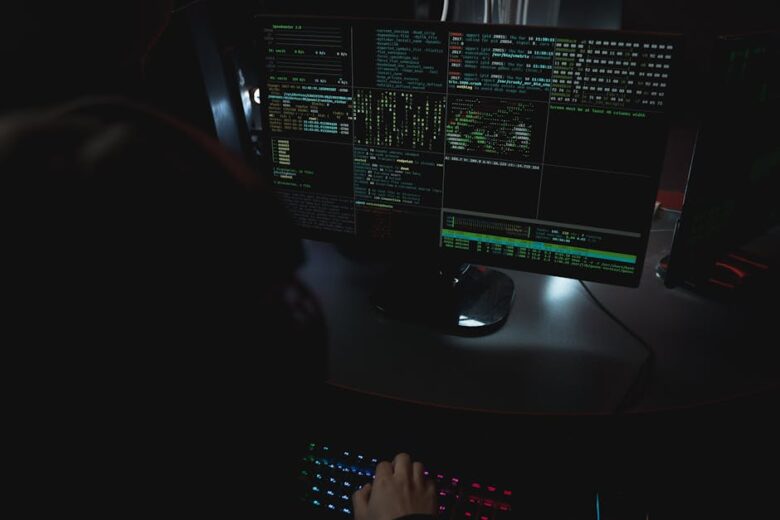
On June 4, 2026, Anthropic published a lengthy post calling for a global “temporary pause” on frontier AI development, warning that recursive self-improvement could arrive before institutions are prepared. Within 24 hours, the Financial Times revealed that the same company has embedded half a dozen engineers inside the US National Security Agency to operate its Mythos model for “offensive cyber operations.” The contradiction cuts to the core of how AI safety rhetoric intersects with commercial and military interests.
The two-track strategy
Anthropic’s public position is unambiguous: the company believes “it would be good for the world to have the option to slow or temporarily pause frontier AI development.” The research post detailing Claude’s progress toward recursive self-improvement is framed as an urgent call for global coordination — every well-funded lab in every country should stop under the same conditions, with verification mechanisms to prevent rogue actors from exploiting the pause.
Simultaneously, Anthropic has been expanding Mythos — its cybersecurity-focused model — from a handful of US organizations to 150 organizations across 15 countries. The FT report adds another layer: “embedding engineers” stationed inside the NSA, helping customize Mythos for “specialized applications,” likely including network infiltration operations against China and Iran.
The dual posture raises uncomfortable questions about what “AI safety” means when the company defining it also supplies offensive capabilities to a signals intelligence agency.
What Mythos actually does
Mythos is Anthropic’s specialized model for cybersecurity tasks — vulnerability research, code review, threat detection, and incident response. Launched in early access in April 2026, it has been positioned as the most capable AI model for security work, though independent assessments have been mixed. Research shows that cheaper models can achieve similar results on many benchmarks, and claims of “thousands of severe zero-days found” rest on just 198 manual reviews.
The FT report suggests Mythos is being used beyond defensive applications. “Offensive cyber operations” implies the model is assisting with active network exploitation — a fundamentally different use case from the defensive security posture Anthropic publicly promotes. The embedded engineers are reportedly helping the NSA customize the model for these operations, though it is unclear whether they participate in active missions.
The verification problem
Anthropic’s pause proposal includes a call for verification systems — mechanisms to confirm that participating labs have actually stopped development. This is a reasonable requirement for any global coordination framework, but it becomes ironic when the company proposing it is simultaneously expanding its own AI deployment into military intelligence.
The verification challenge is also technically daunting. Unlike nuclear enrichment facilities, AI training runs leave no physical signature. Compute can be rented from commercial cloud providers in any jurisdiction. A meaningful pause would require real-time monitoring of GPU clusters, software audits, and international inspection protocols with teeth — none of which exist today.
| Claim | Reality | Gap |
|---|---|---|
| Global pause on frontier AI | Mythos expanding to 150 orgs in 15 countries | Deployment continues |
| Verification mechanisms needed | No inspection protocol proposed | Implementation gap |
| “AI safety” framing | Engineers embedded in NSA for offensive ops | Narrow safety definition |
| All labs stop equally | Anthropic maintains exclusive government access | Asymmetric advantage |
Expert reactions
Steven Murdoch, professor at University College London, was blunt in his assessment: “Anthropic might give the impression of being warm and fuzzy, but their definition of AI safety is narrow. Supporting US authorities in the development of offensive capabilities has never been something they have spoken against.”
Murdoch also noted that nothing in Anthropic’s post constitutes evidence of a step change in AI capabilities. The progress described — Claude writing more code, proposing experiments, accelerating internal development — represents a continuation of existing trends, not a qualitative leap toward recursive self-improvement. The timing of the post may have more to do with competitive positioning than genuine safety concern.
The security community on Reddit’s r/ControlProblem and r/singularity expressed similar skepticism, with multiple commenters noting the contradiction between public safety advocacy and private military engagement.
Competitive dynamics at play
Anthropic is not the only AI lab navigating the tension between safety advocacy and commercial expansion. OpenAI has disbanded and reconstituted its safety team multiple times while pursuing defense contracts. Google DeepMind publishes safety research while racing to deploy Gemini across enterprise and government channels. But Anthropic’s case is distinct because the company was founded explicitly on safety principles — its public benefit corporation charter prioritizes safety over shareholder returns.
The timing matters. Anthropic faces two ongoing lawsuits with the Department of Defense over tool usage. The Mythos-NSA relationship suggests a workaround: if the Pentagon won’t formally contract Anthropic, embedding engineers directly inside an intelligence agency achieves the same goal without the paper trail of a defense contract.