A Reddit post about running Qwen 3.5 9B on a 16 GB M1 Pro mattered for one reason: the experiment sounded ordinary. No rack of GPUs, no lab hardware, no benchmark theater. Just a laptop handling memory recall, simple tool calls, and routine agent work locally. Add a smaller model running offline on an iPhone, and the signal gets clearer. Local AI has crossed into usable territory for a real slice of everyday work.
Why this small Reddit experiment deserves more attention than another flashy demo
The thread came from r/LocalLLaMA, but the important part was not hobbyist enthusiasm. It was the workload. The author swapped a cloud model out of a personal automation stack, pointed the same system at Qwen 3.5 9B through Ollama, and ran actual tasks from a real queue. That is a better test than most launch videos because it asks the only question that matters in production: what work can this system absorb without turning into a maintenance problem?
The answer was refreshingly specific. Memory recall worked. Simple tool calling mostly worked. Straightforward agent tasks held together. Creative work and heavier reasoning still showed a clear gap. That is exactly the kind of boundary line operators need. Nobody serious is trying to prove that a 9B local model replaces Claude Opus, Gemini Pro, or GPT-class frontier systems across the board. The interesting shift is narrower than that, and more practical: a cheap, private, always-available local tier can now take the first pass on a meaningful share of low-risk work.
That lines up with two ideas we have been pushing on CloudAI for weeks. First, the AI bill is now an operating decision, not a research curiosity. Second, strong teams are building portfolios of models rather than betting everything on one endpoint. If you read The AI Power Bill Is Now a Product Decision and The New AI Stack Is a Portfolio, Not a Monolith, this Reddit post looks less like an anecdote and more like another confirmation that the stack is moving down-market, onto devices people already own.
What actually worked on the MacBook, and what clearly did not
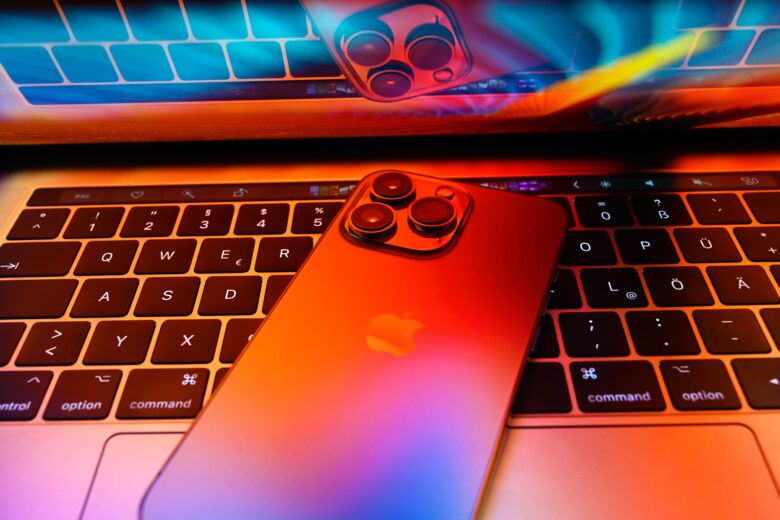
The original Reddit post and the linked write-up are useful because they avoid the usual chest-thumping. The hardware was an M1 Pro MacBook with 16 GB of unified memory. The setup was simple: install Ollama, pull Qwen 3.5 9B, point an OpenAI-compatible client at localhost, and run the existing agent harness without changing the surrounding architecture. That detail matters. The real win was not “local AI exists.” The real win was that the switch happened with almost no plumbing drama.
On that laptop, the author reported three results that deserve attention:
- Memory recall and file-based context retrieval were good enough to be genuinely useful.
- Tool calling worked on straightforward requests, which is more important for automation than polished prose.
- Creative writing and heavier reasoning still lagged enough that the ceiling was obvious.
That split is the whole story. A lot of agent work is not grand strategy. It is reading a file, extracting the right bit, formatting output, choosing the correct tool, and moving on. Those jobs are repetitive, bounded, and easy to validate. They do not need frontier-model elegance every time.
The bonus test on mobile makes the trend harder to ignore. The same write-up described running Qwen 0.8B and 2B locally on an iPhone 17 Pro through PocketPal AI. That does not mean your phone is ready to become a research analyst. It means something simpler, and arguably more important: offline language models are now viable on consumer mobile hardware for short, contained tasks. The PocketPal App Store listing leans into exactly that use case, promising offline chatting, on-device model downloads, and local processing with “Data Not Collected.”
There is a nice bit of sobriety in that mobile experiment too. The tiny models were useful only within limits. That is good news, not bad news, because it forces the right architectural conclusion: local-device AI belongs in a routing strategy, not in a fantasy where one cheap model does every job. We made a similar point in The $600 AI Revolution, but the Reddit case sharpens it. Consumer hardware has crossed the threshold where local inference is part of workflow design, not just a side project for enthusiasts.
The benchmarks say “usable.” The trade-offs say where to stop.
The Hugging Face model card for Qwen3.5-9B helps explain why the Reddit experience felt plausible. The published scores are strong enough to support bounded automation: 82.5 on MMLU-Pro, 81.7 on GPQA Diamond, 66.1 on BFCL-V4 for function calling, 79.1 on TAU2-Bench, and 55.2 on LongBench v2. Those are not toy numbers. They suggest a model with respectable general competence, decent tool-use behavior, and enough context handling to support document-heavy workflows.
But the same model card also shows where the cracks appear. DeepPlanning comes in at 18.0. LiveCodeBench v6 is 65.6. That is not a disaster. It is a map. Short-horizon tasks, local retrieval, and constrained tool use are in reach. Long-chain planning, subtle synthesis, and hard coding loops still deserve stronger models or stronger human supervision. This is exactly the sort of benchmark reading most teams still fail to do. They look for one headline score and miss the workload signature underneath it.
There are four trade-offs to keep front and center if you want to use local models without talking yourself into a dead end:
- Privacy versus raw capability: local inference keeps sensitive context on the device, but the best frontier models still pull ahead on messy reasoning and nuanced writing.
- Marginal cost versus operator time: local tokens are cheap, but slow responses and weak planning can create hidden labor if you route the wrong tasks downward.
- Simplicity versus scale: Ollama’s local OpenAI-compatible API is operationally pleasant, yet higher concurrency or heavier orchestration may still push teams toward server-grade deployments.
- Context length on paper versus context you can tolerate in practice: Qwen’s native long context is impressive, but on a laptop you still feel the latency bill long before you hit the theoretical limit.
This is why the best way to think about local AI right now is as a first-pass layer. Let the small local model handle cheap cognition. Escalate when the task gets ambiguous, high-stakes, or structurally difficult. That routing logic is where the savings and resilience come from.
Three concrete places where a local-first tier already makes sense
The Reddit case is personal, but the pattern travels well.
Case 1: personal or team automation. If your workflow involves reading internal notes, retrieving structured context, formatting summaries, and firing predictable tools, a 9B local model is now credible as a front-line worker. It will not write your board memo. It can absolutely reduce how often you pay frontier prices for housekeeping.
Case 2: mobile, offline assistance. Field teams, traveling executives, and privacy-sensitive users do not always need a network call for every language task. A phone-running model can handle short checklists, quick rewrites, personal notes, and lightweight question answering when connectivity is weak or privacy matters more than sophistication.
Case 3: document-heavy internal search and triage. Local models fit surprisingly well when the job is to normalize labels, classify intake, rewrite queries, or summarize short chunks before the expensive model is called. In many organizations, that is where the volume sits.
The common thread is simple: the task is bounded, the failure cost is manageable, and validation is easy. Once those three conditions hold, local inference starts looking less like a compromise and more like good operational hygiene.
A rollout framework that keeps local AI useful instead of annoying
If you want to test this seriously, do it like an operations team, not like a demo team.
- Inventory your tasks by failure cost. Separate routine chores from high-stakes work. Do not route contracts, customer escalations, or architecture decisions to a local 9B model just because it handled a clean benchmark prompt.
- Start with a narrow first-pass lane. Good candidates are summarization, short extraction, file lookup, metadata tagging, and tool selection for well-defined actions.
- Keep the harness model-agnostic. The Reddit experiment worked because the surrounding agent system did not need surgery. That is the design to copy. Swap models with configuration, not rewrites.
- Measure correction burden, not just token cost. A free local answer is expensive if a human spends three minutes fixing it. Track edit time, retries, and escalations.
- Create a clear promotion rule. When the local model shows uncertainty, weak structure, or multi-step reasoning demands, escalate automatically to a stronger cloud model.
- Test offline and low-connectivity scenarios on purpose. Local AI becomes much more valuable the moment network reliability stops being an assumption.
That last point is often missed. Teams talk about privacy and cost, which are real, but resilience is the sleeper benefit here. A local layer gives you graceful degradation. Even if the premium API is slow, down, or suddenly pricier, the bottom tier of your workflow can keep moving.
Ollama is part of why this transition is happening now. Its local runtime and OpenAI-compatible API lower the activation energy. The user in the Reddit thread did not need a bespoke serving stack, and that matters. Friction kills good architecture. When local inference can be introduced with a configuration change instead of a six-week platform project, more teams will actually try it.
Where local models still disappoint, and why pretending otherwise is a mistake
There is plenty of hype around device AI right now, and some of it is deserved. Some of it is nonsense. A laptop-grade 9B model is not where you should park deep research, complex product strategy, tricky negotiation language, or broad creative synthesis. The Reddit author was right to say the gap remained obvious on heavier reasoning. The benchmark profile says the same thing.
That is fine. Mature teams do not need one model to do everything. They need predictable lanes. Frontier systems remain the better choice for long-horizon planning, difficult code generation, subtle editorial work, and any decision where a clean-looking wrong answer creates real damage. Local AI earns its keep lower in the stack.
FAQ
Is a 9B local model enough for full agent autonomy?
No. It is enough for a subset of agent tasks, especially retrieval, formatting, short summaries, and simple tool use. Once planning depth rises, performance falls off quickly.
Why does running on a 16 GB MacBook matter so much?
Because it changes adoption math. A capability that required specialized hardware last year now fits on a machine many operators already own. That widens the market faster than another benchmark win does.
Does local AI automatically save money?
Not automatically. It saves money when task routing is disciplined. If you send hard tasks to a weak local model and force humans to repair the output, your hidden labor cost will erase the gains.
What is the strongest argument for local AI right now?
A three-way combination: lower marginal cost, better privacy, and graceful degradation when the network or provider layer misbehaves.
What is the strongest argument against using it too broadly?
Overconfidence. Small models often look coherent right up to the point where they fail on planning, nuance, or unstated assumptions. That is why escalation rules matter more than model enthusiasm.
The editorial bottom line
The Reddit post was interesting because it was modest. A regular MacBook, a recent open model, a phone running a smaller variant, and an agent stack doing ordinary work. That is enough to mark a real transition. Local AI is not ready to replace the top end of the market. It does not need to. It is already useful in the cheaper, quieter, high-volume part of the workflow, and that is where architecture decisions start to compound.
The teams that benefit first will be the ones that stop asking whether local models can win a beauty contest and start asking which tasks they can take off the expensive path tomorrow morning.
References
- Reddit / r/LocalLLaMA: Ran Qwen 3.5 9B on M1 Pro (16GB) as an actual agent, not just a chat demo. Honest results.
- Source write-up: I Ran Local AI on My MacBook and iPhone. The Gap Is Closing
- Hugging Face model card: Qwen/Qwen3.5-9B
- Ollama project: ollama/ollama
- PocketPal AI App Store listing: PocketPal AI App – App Store
- Ollama library page: qwen3.5:9b