AI’s New Scoreboard: Why Benchmarks Alone No Longer Predict Who Wins
If you spend time in AI circles, you see the same argument every week: a new model tops a leaderboard, and people declare a winner. A recent Reddit post in r/artificial pushed back hard on this pattern, arguing that benchmark rankings are a lagging indicator of where power is actually accumulating. That instinct is right.
The next phase of AI competition is less about single test scores and more about execution across five layers: infrastructure, distribution, developer adoption, unit economics, and trust. If you are building products, buying enterprise AI, or allocating capital, this matters more than who won one benchmark on one Saturday.
This piece breaks down where benchmarks still matter, where they fail, and how teams can build an implementation framework that tracks real-world advantage.
The Reddit trigger: “benchmarks don’t tell you who’s winning”
The Reddit thread that sparked this discussion made a blunt claim: most public comparisons focus on model output quality while ignoring the systems that determine long-term winners. The post’s core point was not that benchmarks are useless; it was that they are incomplete as strategic signals.
That distinction is crucial.
Benchmarks can answer narrow questions well:
- Can this model solve harder coding tasks than last month’s version?
- Does multimodal reasoning improve across releases?
- Is one model family improving faster than another on standardized tests?
But they struggle with decision-grade questions:
- Which vendor will sustain quality under heavy enterprise load?
- Which stack has enough inference margin to support aggressive pricing?
- Which platform is becoming the default inside developer workflows?
- Which provider can absorb regulation shocks without stalling product velocity?
When people treat technical benchmark wins as market inevitability, they confuse a product snapshot with a business trajectory.
Benchmarks are real signals, just not complete strategy
To be fair, benchmark ecosystems have improved. Platforms like Chatbot Arena aggregate millions of pairwise votes, which is better than tiny internal tests. Composite indexes and broad evaluations also reduce the risk of cherry-picking one task category.
Even so, two structural problems remain.
1) Benchmark saturation happens faster than strategy cycles
Once a benchmark becomes famous, teams optimize for it. Scores rise fast, variance compresses, and headline gaps shrink. At that point, the benchmark is still useful for quality control but less useful for predicting who creates durable advantage.
The Stanford AI Index 2025 highlighted how quickly model capability and cost curves are moving. It also showed a dramatic drop in inference costs for GPT-3.5-level performance over a short period. That is exactly why static scorecards age quickly: economic and deployment conditions can shift before your procurement process is done.
2) Benchmarks rarely price latency, reliability, and workflow friction correctly
In production, users do not experience “Elo score.” They experience response delay, timeout rates, tool-call reliability, hallucination impact, and whether output fits their workflow without manual cleanup.
A model that is slightly better on a leaderboard but 2x harder to operate can lose in enterprise settings where consistency and integration effort dominate.
The five-layer scoreboard that actually predicts momentum
If you want a truer competitive picture, track these five layers in parallel.
1) Infrastructure leverage (compute + memory + networking)
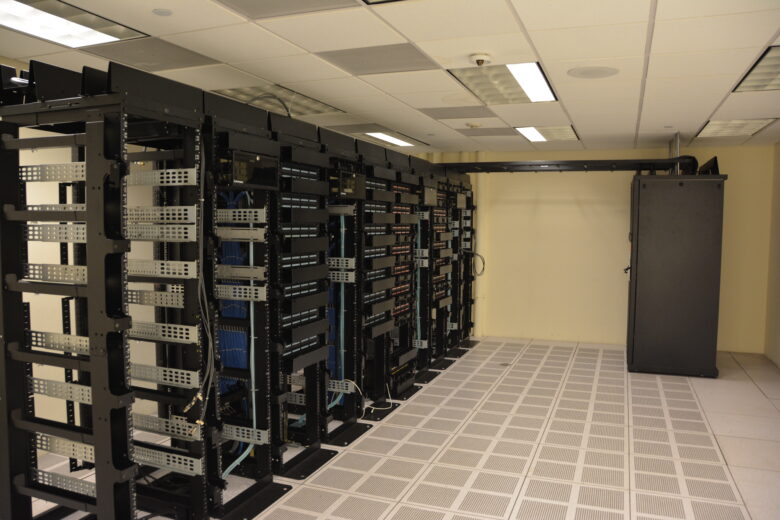
Infrastructure is still destiny in AI, even if product demos hide it.
Vendors with superior access to accelerated compute, memory bandwidth, and data center networking can iterate faster, hold more concurrency, and reduce serving cost per useful token. AWS’s P5/H100-H200 positioning and NVIDIA’s H200 memory profile are not side notes; they shape model availability, queue times, and margins.
Concrete case
When demand spikes after a major release, weaker infrastructure positions often show up as:
- temporary feature gating,
- aggressive rate limits,
- slower regions,
- or quality trade-offs in cheaper tiers.
The market reads this as “product instability,” but the root issue is usually infrastructure elasticity.
2) Distribution and default placement
Many AI buyers still underestimate distribution moats. If your assistant is pre-bundled into office workflows, developer IDEs, cloud consoles, and mobile surfaces, you start each quarter with lower customer acquisition friction.
Distribution does not guarantee technical leadership, but it compounds adoption even when benchmark gaps are narrow.
Trade-off
Distribution-heavy players can ship “good enough” models and still win usage share. Model-first challengers may deliver better quality but struggle to convert that edge into durable daily use without channels.
3) Developer ecosystem gravity
Developer behavior is one of the best early indicators of platform durability.
Signals that matter:
- API stability and backward compatibility,
- SDK quality and documentation depth,
- observability hooks,
- function/tool calling reliability,
- and how quickly community frameworks support new releases.
A model can be top-tier on paper and still lose momentum if integration feels brittle.
Concrete case
We have repeatedly seen teams keep a “second-best” model in production because migration risk is expensive. If an incumbent API is deeply integrated into billing, guardrails, and monitoring pipelines, switching costs outweigh small benchmark gains.
4) Unit economics and pricing resilience
AI strategy now lives or dies on margins.
When inference costs drop quickly, providers can use pricing offensively. Teams with better efficiency can cut price, add context length, or bundle features without destroying gross margin. Teams without that cushion are forced into defensive packaging or stricter limits.
Benchmark vs economics reality
A +3 benchmark gain that increases serving cost by 40% may be rational for premium research tiers, but it can fail commercially in high-volume support, search, or coding copilots where cost per resolved task is the true KPI.
5) Trust, governance, and procurement risk
Trust has moved from PR language to procurement criteria.
In regulated industries, buyers increasingly ask:
- What data is retained?
- Which regions support residency controls?
- How auditable are model decisions and tool actions?
- What happens under legal or policy pressure?
Teams that can answer these quickly shorten enterprise sales cycles. Teams that cannot, even with stronger raw models, get trapped in extended review loops.
Where teams get fooled by “leaderboard thinking”
Three recurring mistakes show up in postmortems.
1. Single-model dependence: Betting everything on one frontier API with no fallback path.
2. Proxy metric worship: Optimizing for benchmark deltas while user task completion stagnates.
3. Late economics review: Treating cost controls as a Phase 2 task after launch.
Each one is avoidable with a portfolio mindset.
Implementation framework: the 90-day real-world evaluation stack
If you need to choose or re-choose your AI stack this quarter, use this practical framework.
Phase 1 (Weeks 1–2): Define your decision metrics before testing
Set five weighted dimensions:
1. Task success rate on your real workflows
2. End-to-end latency at target concurrency
3. Cost per successful task (not per token alone)
4. Integration and maintenance effort
5. Security/compliance fit
Write these weights down before touching a leaderboard. Otherwise, recency bias will drive your choice.
Phase 2 (Weeks 3–5): Build a multi-model harness
Test at least three model options:
- one frontier premium model,
- one cost-efficient model,
- one open or region-friendly alternative.
Run the same workload set across all three. Include failure categories (tool-call breaks, grounding errors, escalation cases), not just average quality.
Phase 3 (Weeks 6–8): Run chaos scenarios
Simulate conditions that benchmarks ignore:
- traffic spikes,
- context-heavy requests,
- long session memory,
- partial outage failover,
- prompt-injection attempts in tool-enabled flows.
Measure degradation slope, not just baseline performance.
Phase 4 (Weeks 9–10): Price stress test
Model three pricing scenarios:
- current list price,
- 20% price increase,
- emergency reroute to backup model.
If your unit economics break under any one scenario, redesign routing before production expansion.
Phase 5 (Weeks 11–12): Decide architecture, not vendor identity
Finalize a portfolio architecture:
- primary model by use case,
- backup model for continuity,
- policy-based router for cost/latency/risk,
- periodic re-benchmark schedule (monthly or per major release).
This avoids lock-in panic and keeps negotiation leverage.
Benchmarks still have a place—use them surgically
A mature AI team does not ignore benchmarks; it repositions them.
Use benchmarks for:
- early capability screening,
- release regression checks,
- and identifying emerging model families.
Do not use benchmarks as your sole proxy for:
- enterprise readiness,
- margin durability,
- or platform defensibility.
A useful heuristic: if a metric is easy to screenshot on social media, it is probably too shallow to run your roadmap alone.
What this means for founders, product leads, and CTOs
For founders
Stop framing your stack as allegiance to one provider. Investors now expect contingency architecture. Show routing logic, not fan branding.
For product leads
Track “time to trustworthy answer” and “cost per completed user outcome.” These beat generic quality metrics in roadmap prioritization.
For CTOs
Build procurement and engineering into one loop. Vendor reviews that ignore runtime telemetry create expensive surprises.
A quick checklist you can use this week
- [ ] We have at least two viable model paths for each critical workflow.
- [ ] We measure task completion, not just benchmark or prompt-level quality.
- [ ] We know our cost per successful outcome by use case.
- [ ] We have explicit fallback behavior for degraded provider performance.
- [ ] We review governance and data handling terms each quarter.
- [ ] We re-evaluate model routing monthly, not annually.
If you cannot check at least four items, your risk is operational, not theoretical.
FAQ
Are public leaderboards useless now?
No. They are valuable for directional capability tracking. They become dangerous only when used as full strategy substitutes.
Should we always choose the highest-ranked model?
Only if your workload economics and reliability targets still hold. Many teams get better business results with a hybrid setup: premium models for hard tasks, efficient models for routine flows.
Is open-source automatically cheaper?
Not always. Self-hosting can reduce variable API spend but increase fixed infra, ops, and reliability costs. Total cost depends on utilization, team skill, and uptime requirements.
How often should we revisit model decisions?
For most teams: monthly light reviews and quarterly deep reviews. AI cost-performance curves move too fast for annual-only strategy cycles.
What is one sign our evaluation process is broken?
If your team can quote benchmark scores instantly but cannot report cost per successful user task, your measurement stack is upside down.
Final editorial take
The Reddit critique is timely: AI competition is now a systems game. Benchmarks still matter, but they are one instrument in a much larger control panel.
Winners over the next 24 months will not be the teams that chase every leaderboard spike. They will be the teams that combine adequate model quality with superior infrastructure access, disciplined economics, distribution leverage, and governance credibility.
In short: stop asking, “Who has the best model this week?”
Start asking, “Who can deliver reliable, affordable, trusted outcomes at scale for the next two years?”
That question predicts winners better.
References
- Reddit (r/artificial): “Benchmarks don’t tell you who’s winning the AI race. Here’s what actually does.” https://www.reddit.com/r/artificial/comments/1ril7i9/benchmarks_dont_tell_you_whos_winning_the_ai_race/
- Stanford HAI: AI Index 2025 report and summary charts https://hai.stanford.edu/ai-index/2025-ai-index-report and https://hai.stanford.edu/news/ai-index-2025-state-of-ai-in-10-charts
- OpenLM Chatbot Arena+ leaderboard overview https://openlm.ai/chatbot-arena/
- AWS EC2 P5/P5e/P5en instances overview https://aws.amazon.com/ec2/instance-types/p5/
- NVIDIA H200 product page/spec highlights https://www.nvidia.com/en-us/data-center/h200/